Experience the charm of Porto
Porto's unique blend of history, culture and innovation continues to make it one of Europe's most captivating destinations. Read on to learn about a beloved Portuguese beverage, delve into the lives of several remarkable cultural figures and discover the fascinating story behind an engineering marvel.
Porto
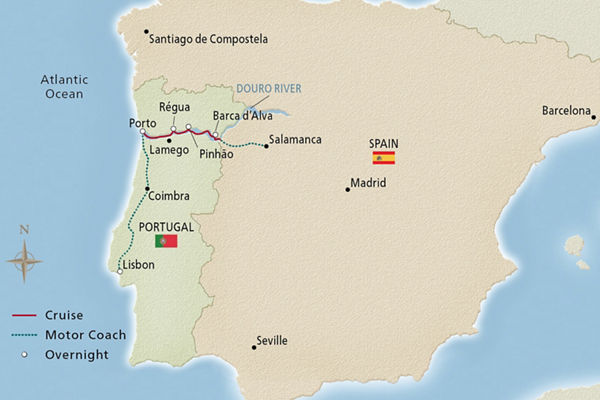
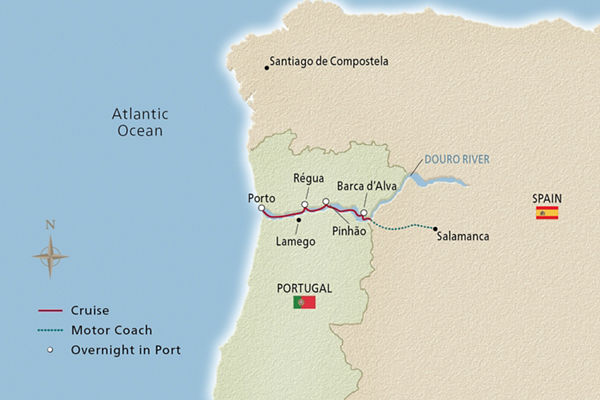
Porto is located in northern Portugal, along the Douro River. Renowned for its historic waterfront, world-famous port wine and distinctive architectural character, Porto has served as a gateway between Portugal and the wider world for centuries. Its strategic location fostered maritime trade, commerce and cultural exchange, helping transform the city into one of the most important economic and cultural centers on the Iberian Peninsula.
Porto's core, designated as a UNESCO World Heritage Site in 1996, is characterized by narrow medieval streets, colorful riverside buildings and grand monuments that reflect more than 2,000 years of history. Meanwhile, modern landmarks such as the Serralves Museum of Contemporary Art showcase the city's embrace of contemporary culture.
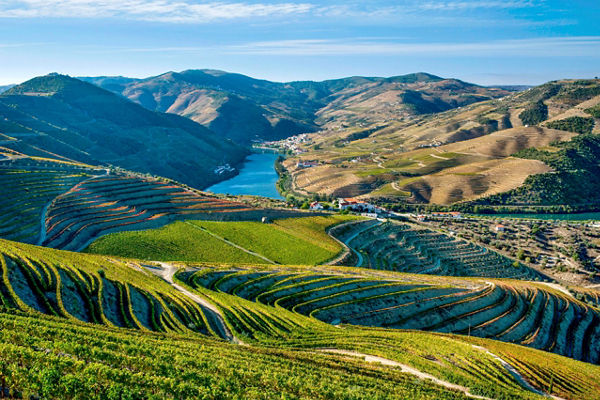
Porto experiences a temperate maritime climate influenced by its proximity to the Atlantic Ocean. Summers are generally warm and dry, with temperatures typically ranging from 70°F to 85°F (21°C to 29°C), while winters are mild, often ranging from 40°F to 60°F (4°C to 16°C). This favorable climate, combined with the fertile Douro Valley inland, has contributed to the region's long-standing reputation for viticulture.
Porto's origins can be traced to a Roman settlement known as Portus Cale, a name that later evolved into "Portugal." During the Middle Ages, Porto emerged as an important commercial and religious center, with merchants trading goods throughout Europe and beyond.
In 1387, King John I married Philippa of Lancaster in Porto Cathedral. The marriage strengthened the Anglo-Portuguese Alliance established by the Treaty of Windsor (1386), creating one of the world's oldest continuously maintained diplomatic alliances. Their son, Prince Henry the Navigator (1394–1460), later became one of the driving forces behind Portugal's era of maritime exploration.
Over the centuries, Porto stood at the center of many of Portugal's defining historical events, from the Age of Discovery (15th–17th centuries) to the Napoleonic Wars of the early 19th century. In 1809, as French forces advanced on the city, thousands of residents tried to escape across a temporary bridge over the Douro River. In an event later known as the Porto Boat Bridge Disaster, the bridge collapsed, causing the tragic deaths of many civilians. Two months later, British and Portuguese forces under Sir Arthur Wellesley recaptured Porto from the French during the Second Battle of Porto.
During the Portuguese Liberal Wars (1828–1834), a civil conflict between liberal constitutionalists and royal absolutists, Porto became a stronghold of the liberal cause during the Siege of Porto (1832–1833). Despite enduring nearly a year of hardship and bombardment, the city successfully resisted absolutist forces and emerged as a symbol of constitutional government. This resilience helped earn Porto its nickname, "The Unconquered City" (Cidade Invicta).
Today, Porto is celebrated for its rich heritage, acclaimed gastronomy and enduring connection to the Douro River. Below are some of the key attractions and landmarks that define this remarkable city:
- Porto Cathedral–Dominating the historic center, Porto Cathedral is one of the city's oldest monuments. Founded in the 12th century, the fortress-like structure combines Romanesque, Gothic and baroque architectural elements. Its hilltop location offers sweeping views of the city, while its cloisters are decorated with beautiful blue-and-white azulejo tiles depicting religious scenes.
- Clérigos Tower and Church–One of Porto's most recognizable landmarks, the Clérigos Tower rises 246 ft (75 m) above the city skyline. Designed by Italian architect Nicolau Nasoni in the 18th century, the baroque bell tower served as a navigational landmark for ships approaching the Douro River and remains one of the finest viewpoints in Porto.
- São Bento Railway Station–São Bento is famous for its grand entrance hall adorned with more than 20,000 azulejo tiles. Created by artist Jorge Colaço, these intricate ceramic panels depict key moments in Portuguese history, rural traditions and notable stages in the evolution of transportation.
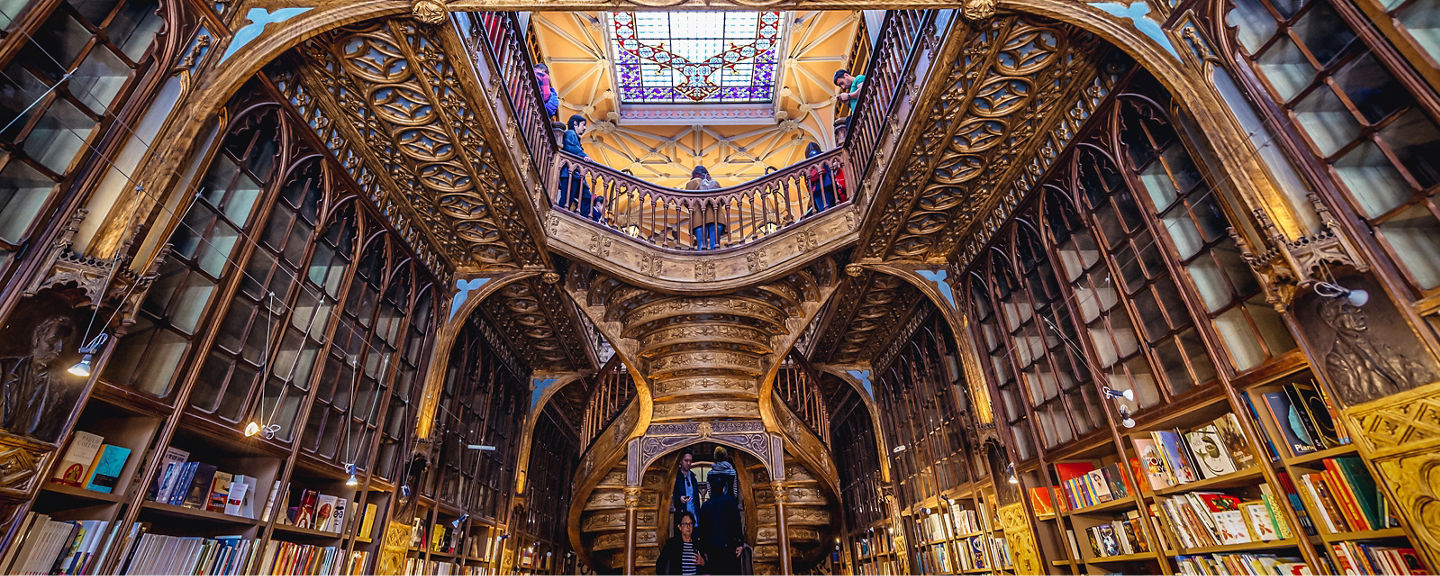
- Livraria Lello–Opened in 1906, Livraria Lello is among Porto's most visited cultural attractions. Its neo-Gothic facade, ornate woodwork, stained-glass ceiling and sweeping red staircase have made the bookstore a celebrated destination for readers.
- Palácio da Bolsa–Built during the 19th century as the headquarters of Porto's Commercial Association, the Palácio da Bolsa reflects the city's mercantile prosperity. Its most impressive space is the lavish Arab Room, an elaborate Moorish Revival hall inspired by the architecture of Granada's Alhambra Palace.
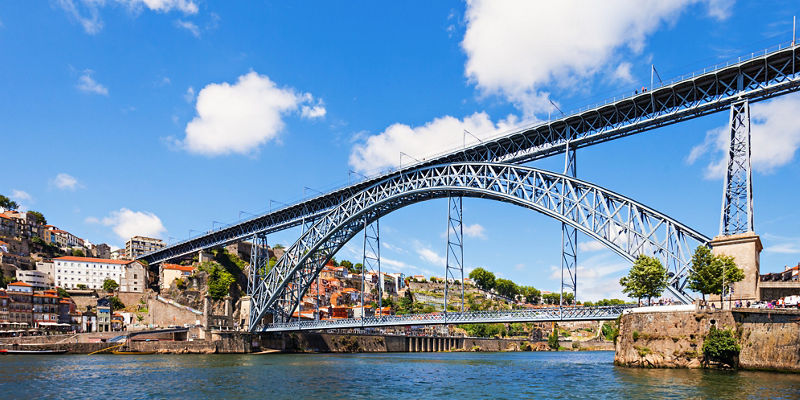
- Luiz I Bridge–Stretching across the Douro River between Porto and Vila Nova de Gaia, the Luiz I Bridge (also known as Ponte de Dom Luís I), is one of Portugal's greatest engineering landmarks. Completed in 1886, its striking iron arch and two-level design have become enduring symbols of the city.
- Serralves Museum of Contemporary Art–Designed by Porto native and Pritzker Prize-winning architect Álvaro Siza Vieira, the Serralves Museum ranks among Europe's leading contemporary art institutions. The museum is set within a 44-acre estate featuring gardens, woodland trails, an art deco villa and an elevated treetop walkway.
- Casa da Música–A bold contemporary landmark designed by Dutch architect Rem Koolhaas, Casa da Música opened in 2005 and quickly became an icon of modern Porto. Its distinctive geometric design houses multiple concert halls and cultural spaces that host performances throughout the year.
- World of Wine (WOW)–Located in Vila Nova de Gaia, directly across the river from Porto, the World of Wine is a large cultural district housed within restored port wine warehouses. Through a collection of immersive museums and experiences, visitors can explore the history of wine, cork production and Portuguese craftsmanship.
- Parque da Cidade–The largest urban park in Portugal, Parque da Cidade covers more than 200 acres of landscaped gardens, lakes, trails and forests that extend all the way to the Atlantic coast. The area offers a peaceful retreat from the city while highlighting Porto's connection to nature and the sea.

-
Luiz I Bridge
Rising high above the Douro River, the Luiz I Bridge, also known as Ponte de Dom Luís I, has become one of Porto's defining landmarks. Linking the historic heart of Porto with Vila Nova de Gaia, the bridge serves as both a practical river crossing and a powerful symbol of the city's industrial heritage. Its graceful iron arch dominates the waterfront skyline, reflecting the engineering ambition and economic growth that transformed Porto in the modern era.
The story of the bridge begins in the second half of the 19th century, a period of rapid industrialization throughout Europe. As Porto expanded and trade along the Douro intensified, the existing floating bridge connecting Porto and Vila Nova de Gaia could no longer accommodate the increased movement of people and goods. City leaders recognized the need for a solution that would strengthen the connection between the two riverbanks.
Construction of the bridge began in 1881 under the direction of Belgian engineer Théophile Seyrig, a former business partner of Gustave Eiffel, engineer of Paris’s Eiffel Tower. Seyrig had already established a reputation as a talented designer of iron structures and proposed an ambitious plan featuring a massive wrought-iron arch, measuring 564 ft (172 m). At the time, the design represented one of the most advanced feats of engineering in Europe.
When the bridge was completed in 1886, it was officially named in honor of King Luís I of Portugal. Although the king himself did not attend the inauguration, the structure quickly became a source of civic pride.
One of the bridge’s most distinctive features is its two-level configuration. The upper deck was designed to connect the higher elevations of Porto and Vila Nova de Gaia, while the lower deck provides direct access to the bustling waterfront districts along the Douro. This innovative arrangement improved circulation within the city and allowed the bridge to serve a variety of transportation needs.
Over the years, the bridge has adapted to changing patterns of travel. Horse-drawn vehicles eventually gave way to automobiles, and in the early 21st century, the upper deck was modified to accommodate the modern Porto Metro system. Today, light-rail trains share the upper level with pedestrians, while vehicles and foot traffic continue to use the lower deck.
Beyond its practical function, the Luiz I Bridge offers some of the most spectacular views in the city. From its upper deck, visitors can admire Porto’s historic center, the wine lodges of Vila Nova de Gaia and the winding Douro River.
-
Notable figures associated with Porto
Porto has long been home to influential writers, artists and architects whose achievements have helped shape Portuguese identity. From the leaders who helped launch the Age of Discovery to internationally acclaimed creative visionaries, these individuals reflect Porto's enduring legacy of innovation, cultural achievement and global influence.
- John I of Portugal (1357–1433) & Philippa of Lancaster (1360–1415)
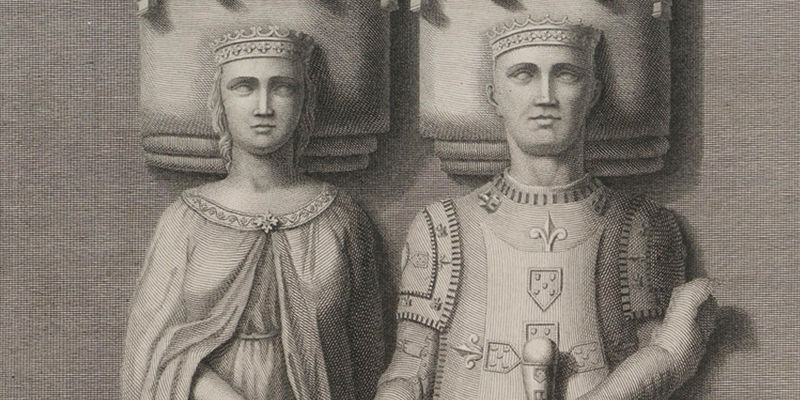
King John I of Portugal and his wife, Philippa of Lancaster are among the most significant royal figures associated with Porto. Their marriage, celebrated in Porto Cathedral in 1387, symbolized the strengthening of the Anglo-Portuguese Alliance, one of the world's oldest diplomatic partnerships, which is still in effect today. Philippa brought English courtly traditions to the Portuguese royal household, and the noble couple raised the "Illustrious Generation" of princes whose leadership helped define Portugal's golden age of exploration. - Prince Henry the Navigator (1394–1460)
Born in Porto at the Casa do Infante, Prince Henry the Navigator became one of the most influential figures of the Age of Discovery. Although he rarely undertook voyages himself, he sponsored expeditions, encouraged advances in navigation and cartography and supported the exploration of the West African coast. His efforts helped establish Portugal as a leading maritime power and opened new routes for trade and exploration. Today, visitors can explore the Casa do Infante, where the prince was born, and learn more about the city’s role in launching Portugal's era of expansion. - Camilo Castelo Branco (1825–1890)
One of the country’s greatest novelists, Camilo Castelo Branco was a prolific writer whose works helped define 19th-century Portuguese literature. Known for his passionate storytelling, vivid characters and dramatic themes, he captured the complexities of Portuguese society through more than 250 published works. His celebrated novel Amor de Perdição (1862) remains one of Portugal's literary classics. Castelo Branco's personal life was often as dramatic as his fiction, including a period of imprisonment in Porto, after he was accused of adultery with a married woman. - Manoel de Oliveira (1908–2015)
Born in Porto, Manoel de Oliveira remains one of Portugal's most acclaimed film directors. His extraordinary career spanned more than eight decades, during which he developed a distinctive artistic style that blended history, philosophy and social commentary. Many of his movies drew inspiration from Porto and featured the city's neighborhoods, architecture and riverfront landscapes. Some of his most acclaimed films include Past and Present (1971), Benilde or the Virgin Mother (1975) and Doomed Love, a 1978 adaptation of Castelo Branco’s novel Amor de Perdição. - Álvaro Siza Vieira (b. 1933)
Regarded as one of the world's foremost contemporary architects, Álvaro Siza Vieira is the leading figure of the internationally renowned School of Porto. Celebrated for his elegant, minimalist designs and sensitive integration of architecture within the surrounding landscape, Siza has received many of the profession's highest honors, including the Pritzker Architecture Prize. His work can be seen throughout Porto and beyond, most notably at the Serralves Museum of Contemporary Art.
- John I of Portugal (1357–1433) & Philippa of Lancaster (1360–1415)
-
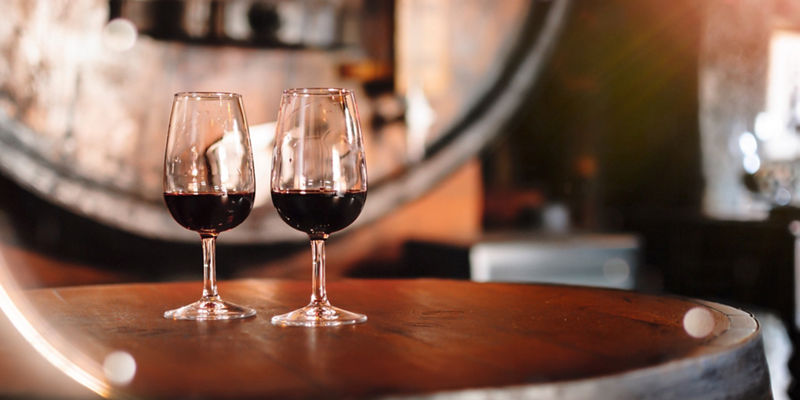
Port wine
Port wine traces its roots to the picturesque Douro River Valley of northern Portugal, where centuries of tradition have shaped its rich character and complexity. The region had been known for wine since ancient times, but port emerged as a distinct product during the 17th century. Frequent political and military conflicts between England and France disrupted Britain's access to French wines, prompting English merchants to seek alternative suppliers. Portugal became a natural trading partner.
Transporting wine across long sea voyages, however, presented challenges. To stabilize the wine and preserve its quality, producers began adding a small amount of grape spirit during fermentation. This process halted fermentation before all the natural sugars were converted to alcohol, resulting in a fortified wine that was both stronger and sweeter than traditional table wines. The style proved immensely popular in Britain and helped launch port's international reputation.
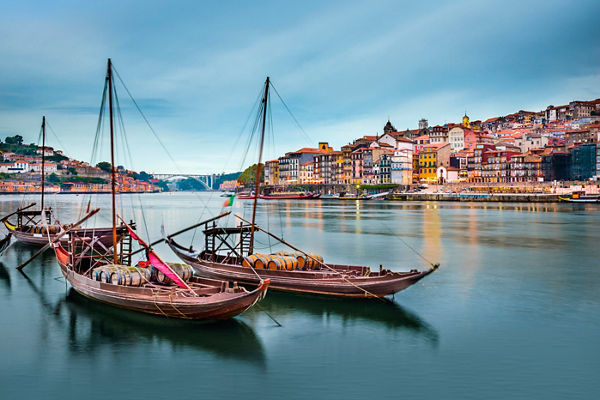
The city of Porto, which gave this iconic fortified wine its name, played a vital role in the beverage’s success. Located near the mouth of the Douro River, Porto became the commercial center for the port wine trade. For centuries, barrels of wine were transported downriver from the vineyards of the Douro Valley to the riverside district of Vila Nova de Gaia, directly across from Porto’s historic center. There, merchants aged, blended and stored the wines before shipping them to markets around the world.
Today, visitors to Porto can still see the famous wine lodges that line the waterfront. Many of the most renowned port houses, including Taylor’s, Graham’s and Sandeman, offer tours and tastings that introduce guests to the traditions behind the wine.
Port wine comes in several distinctive styles. Ruby port is youthful and fruit-forward, known for its deep color and vibrant berry flavors. Tawny port is aged longer in wooden casks, developing notes of caramel, nuts and dried fruit. Vintage port, considered the pinnacle of quality, is produced only in exceptional years and has the ability to age gracefully for decades. Other styles, including white port and rosé port, offer lighter and more contemporary expressions of this classic wine, and they pair well with local seafood dishes.
Port wine remains a symbol of Portuguese craftsmanship and hospitality, and each glass tells a story of exploration, trade and tradition. Its enduring appeal continues to connect modern wine lovers with one of Portugal’s most treasured cultural legacies.
Porto Highlights
Journeying to Porto offers the opportunity to discover Portugal’s rich history, celebrated wine culture and breathtaking landscapes. Here are some highlights you may experience during a voyage to this charming city:
- Explore Porto’s UNESCO-listed historic center
- Ride a rabelo, a boat once used to transport wine barrels
- Taste a variety of port wines in an ancient cellar
- Attend a performance of fado, Portugal’s signature music
- Take in the soaring Clérigos Tower
- Admire the magnificent 12th-century Porto Cathedral
- Stroll the Rua das Flores, a charming pedestrian street
- Take the funicular to the upper level of the Luiz I Bridge
- See the elaborate tiles of the São Bento Railway Station
- Visit a historic cannery during a day trip to Matosinhos
Porto Travel FAQ
Enriching Itineraries—Porto
Choose one of our immersive voyages and discover the many benefits of exploring in Viking comfort.