

Discover the enchanting Danube River
Explore cultural and historical landmarks along one of Europe’s most significant waterways—the Danube River. Read on to learn more about the countries that comprise this diverse region and delve into the unique experiences that await you in Hungary, Austria, Germany and beyond. Trace the historical influences of German and Viennese cuisine, uncover an array of beloved Hungarian traditions and discover the geography of Austria's picturesque Wachau Valley.
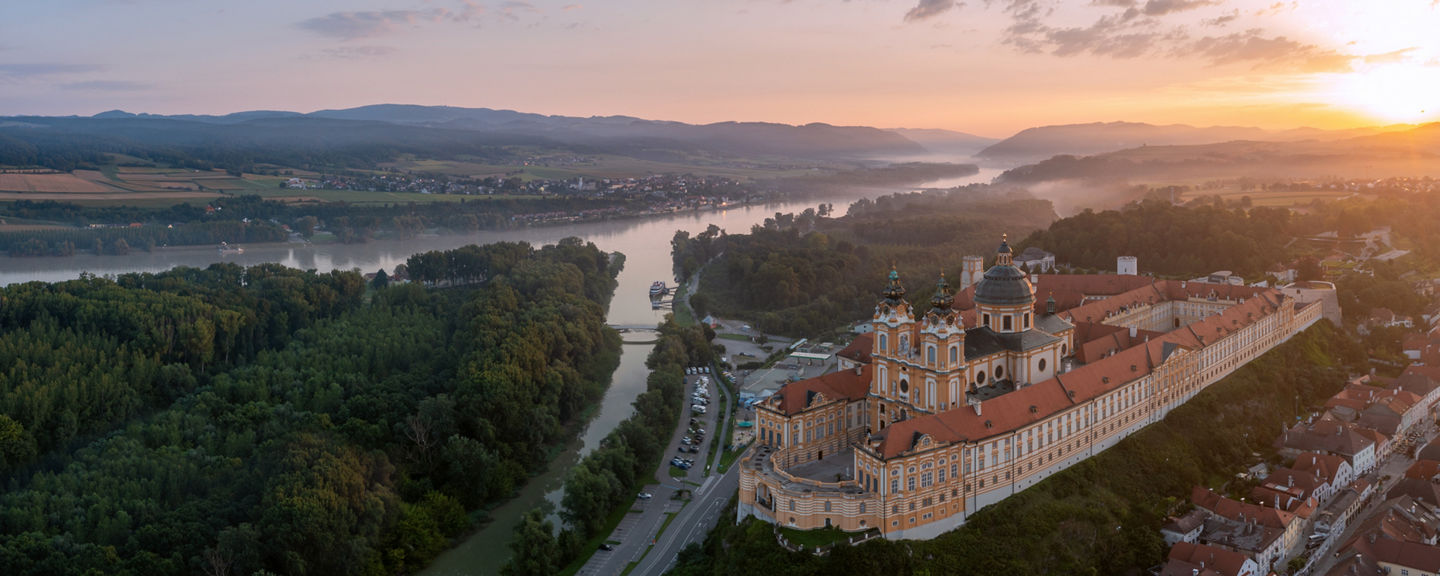
Danube
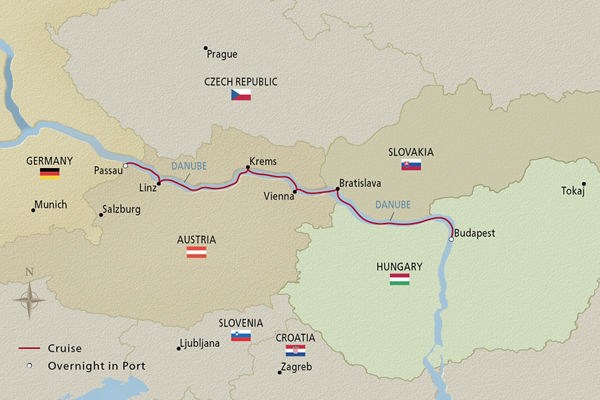
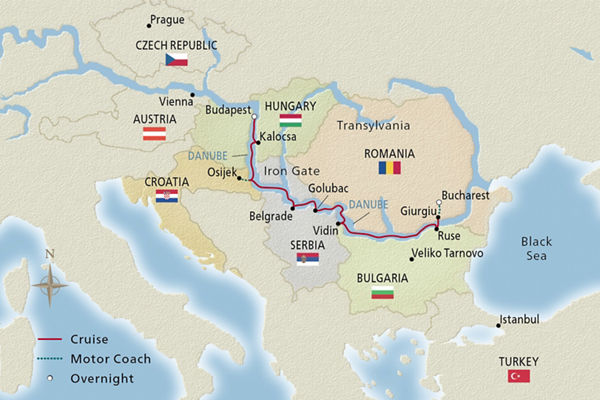
The Danube River, the second-longest river in Europe, flows from its source in Germany and ends at its mouth in the Black Sea. Exploring the Danube River is a journey through history and culture.
Visitors enjoy destinations along the Danube River year-round. The spring months offer cooler temperatures and fewer crowds, while the fall season also provides pleasant weather with fewer tourists. Summer is peak season, with warm temperatures and many visitors. A wintertime visit provides a unique opportunity to experience Europe’s famous Christmas Markets.
The Danube River is home to historic capital cities and lesser-known locales. Here are a few destinations worth visiting:
- Budapest—Known as the “Paris of the East,” Budapest boasts elegant boulevards and a fascinating medieval old town. Highlights of the Hungarian capital include the Matthias Church, Fisherman’s Bastion and the sprawling Buda Castle.
- Vienna—Austria’s capital city has a rich culture that is reflected in its music, architecture and cuisine, each of which have profoundly influenced Europe and the world. There is something to discover at every turn, from Ringstrasse boulevard and the Hofburg Palace to the Vienna State Opera and the city’s famed cafés.
- Bratislava—The Slovakian capital features restored baroque palaces, verdant public squares and the imposing Bratislava Castle. Its Old Town is home to elegant mansions, art nouveau houses and pedestrian zones. St. Martin’s Cathedral, now a concert hall, plays a central role in the city's cultural offerings.
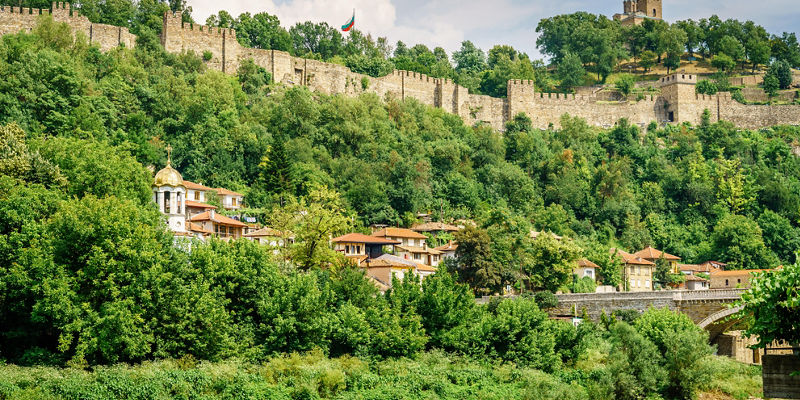
- Vidin—One of Bulgaria’s oldest riverside towns, Vidin retains its charm with its agricultural and trade center, renowned for its wines. Vidin is also home to the well-preserved medieval fortress Babini Vidini Kuli, which translates to Baba (Granny) Vida’s Towers. The fortress was declared a monument of culture in 1964. Today, it is a popular tourist attraction and a frequent filming location.

-
Austria’s winning wines
Rich soil, a temperate climate and high-quality grapes. It is no secret what produces the finest wines in Austria. Many of them come from the scenic Wachau Valley, fed by the waters of the Danube River. Beyond this popular wine region, Austria’s viniculture and history hold many more surprises.
From crisp, light Riesling to floral red Zweigelt, Austria is home to a rich viniculture that produces a vast variety of wines. Here are some interesting facts that even some of the most seasoned oenophiles may not know:
Austria is home to 16 distinct wine regions, all of them in the far eastern part of the country.
The bicycles you might see along the Danube are following trails once walked by horses pulling wine-filled ships upriver.
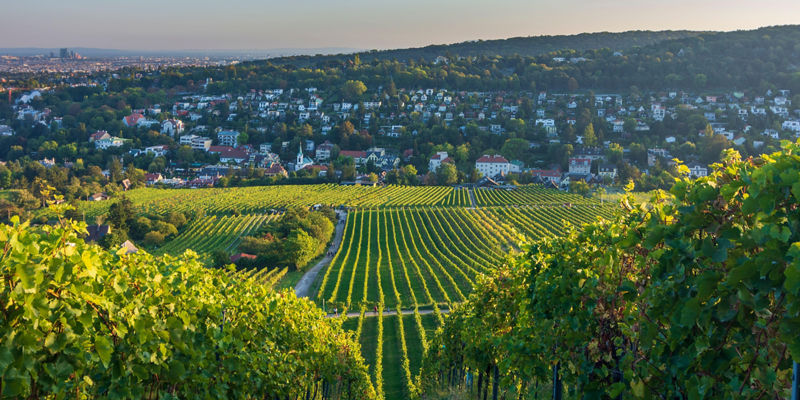
Vienna is the world’s only capital city in which vineyards are cultivated.
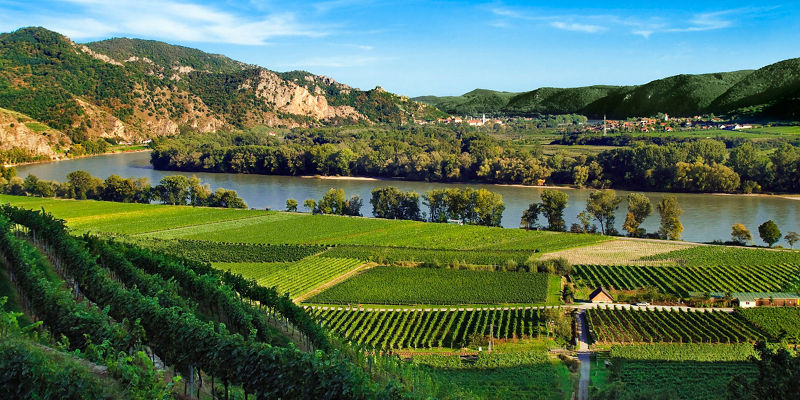
The magnificent Wachau Valley is home to a tiny percentage of Austria’s vineyards, yet most of the nation's top wines hail from here.
Some of Austria’s most coveted wines, including Welschriesling, are produced when a naturally occurring fungus, known as “noble rot,” infects the grapes.
Here is something else to know: In 1784, the Heurigen was born, a decree that allowed winemakers to sell home-grown food with their newly made wine. When the new season’s wine was ready, growers hung fir tree branches over their doors to invite their guests in. It is a tradition that lives on more than 230 years later.
-
Austria's Wachau Valley
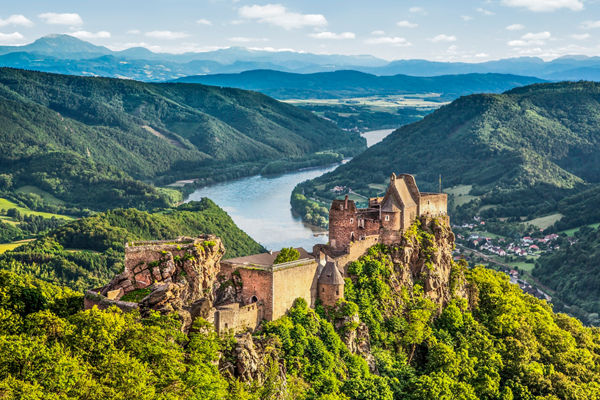
Nestled along the scenic Danube River between Melk and Krems, the Wachau Valley is a gem of picturesque landscapes, rich history and world-class wine production. This stunning region of Austria is characterized by its steep, terraced hillsides, sculpted by the Danube River as it meanders through ancient crystalline rocks like gneiss, amphibolite, marble and quartzite. Terraces, meticulously crafted by Bavarian monasteries in the Middle Ages, provide the perfect conditions for viticulture thanks to their excellent drainage and mineral-rich soils, which prevent erosion and retain heat.
The Wachau Valley's unique terroir is further enhanced by a blend of crystalline rocks and loess in the soil. The region's distinctive climate, marked by hot, dry summers and cold winters, creates significant temperature fluctuations that intensify the aromatic complexity of the grapes. The varied topography fosters numerous microclimates, each contributing to the diversity and exceptional quality of the wines produced here.
Together, these elements produce the Wachau Valley's renowned white wines, particularly those crafted from Grüner Veltliner and Riesling grapes. These wines are celebrated for their distinctive flavors, high acidity and remarkable aging potential. Both wine enthusiasts and nature lovers will rejoice during a visit to Austria’s Wachau Valley.
-
Belogradchik, a fortress of ancient rocks
The town of Belogradchik is located in the northwest part of Bulgaria, near the border of Serbia. Human settlements date back to the early Middle Ages, but it was during the Vidin Kingdom (1371-1422) that Belogradchik became a cultural and administrative center. By 1430, the Ottomans had conquered the entire region.
One region, two fortresses
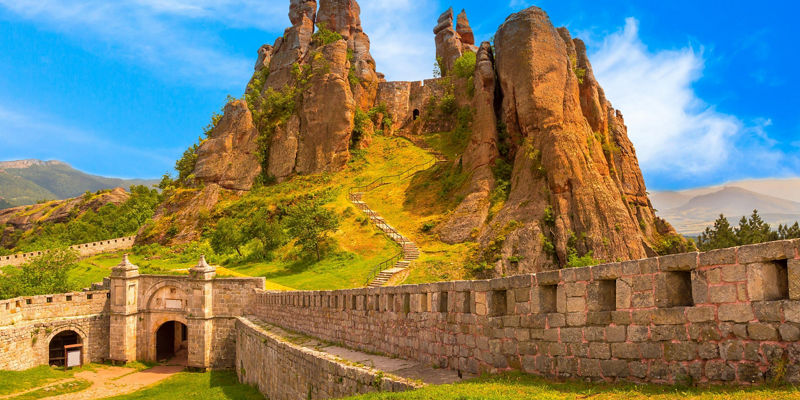
High above the town is a natural phenomenon called the Belogradchik Rocks. Covering an area approximately 18 miles long by four miles wide, the rocks form a natural fortress, and explain why the town is located where it is. In addition to the natural barrier the rocks provide, a second fortress, the Belogradchik Fortress, is built directly into the rock. Due to their distinctive shapes, some of the rocks have names such as the Horse Riser, the Maiden, the Castle and Adam and Eve.
Stars and natural science
Since they are the town’s highest point, the Belogradchik Rocks are a great place for stargazing. The Astronomical Observatory of the Astronomy Institute of the Bulgarian Science Academy is located about 100 yards from the Belogradchik Fortress. The town below the castle also has a Natural Science Museum with more than 3,000 objects illustrating the area’s biodiversity.
-
Beloved Hungarian & Viennese traditions
Destinations along the Danube River are rich in cultural and historical significance. Here are some distinctive local traditions, from Budapest to Vienna:
- Thermal Baths in Budapest
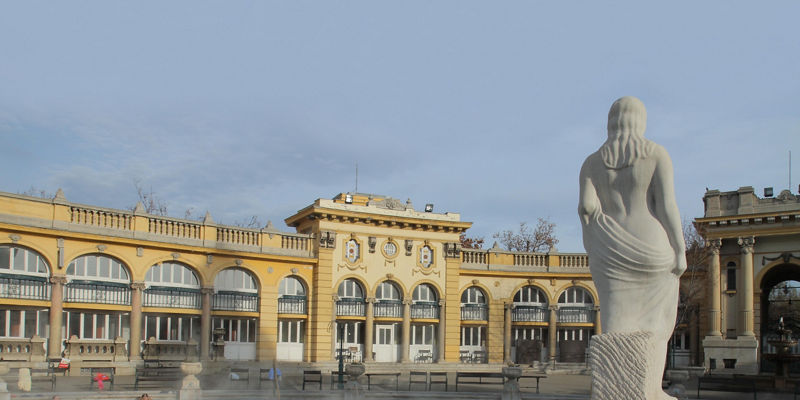
Experience the restorative powers of Budapest’s thermal baths, a centuries-old tradition. Ancient Romans discovered the benefits of these thermal waters. Today, they remain a cherished regimen for local residents. Visitors can immerse themselves in the therapeutic waters of one of Budapest’s historic baths, mingle with locals or simply observe as bathers play chess in the pool. - Busójárás Carnival
Mohács, Hungary, hosts the annual Busójárás Carnival, a UNESCO-recognized event marking the end of winter and celebrating spring. Each year, busós—people dressed in fur and wearing masks—parade and dance through the town, making noise with cowbells and rattles to scare away winter. The carnival is known for its vibrant, energetic atmosphere and celebration of the triumph of spring over winter. - Viennese Waltz
Learn the beloved waltz in Vienna, the “City of Waltzes.” The Viennese waltz, a symbol of Austrian social life, gained popularity in the 1780s. Visitors can schedule dance lessons to learn the steps, leading techniques and proper etiquette for this traditional ballroom dance.
- Thermal Baths in Budapest
-
Culinary specialties along the Danube River
Each country along the Danube boasts its own culinary specialties. Proximity to waterways and access to fresh ingredients have historically influenced regional cuisine. Despite regional differences, many foods and dishes that originated in Germany and Austria have universal appeal:
Hearty German Cuisine
- Bratwurst and Bockwurst: These sausages are sold at street stands and restaurants across the country, best enjoyed with mustard (senf) and a bread roll (brötchen).
- Bavarian Beer Tradition: Bavaria is renowned for its rich brewing tradition. During Oktoberfest, visitors can enjoy a traditional Bayrisch Anstich, a beer-barrel tapping ceremony, accompanied by a three-course Bavarian-style dinner featuring classic dishes.
Coffee & Dessert in Vienna
- Viennese Coffeehouses: The first Viennese coffeehouse opened in 1683. Unlike casual Parisian cafés, Vienna’s coffeehouses were more elegant, featuring coffee, cakes and string quartets. Drinking coffee continues to be a popular social pastime in Austria, and in 2011, UNESCO listed Vienna’s coffeehouse culture on its List of Intangible Cultural Heritage.
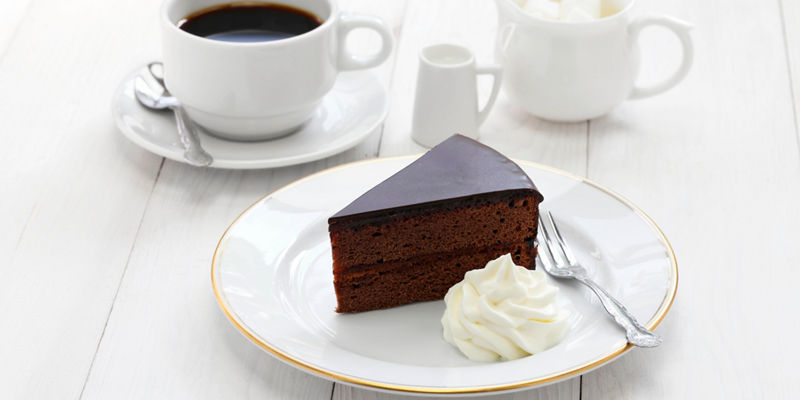
- Sachertorte: This rich chocolate cake was invented in 1832 by 16-year-old Franz Sacher. The dessert consists of a chocolate cake thinly coated with apricot jam, topped with chocolate icing, and served with unsweetened whipped cream.
-
Decebalus, the Dacian emperor who defied the Roman Empire
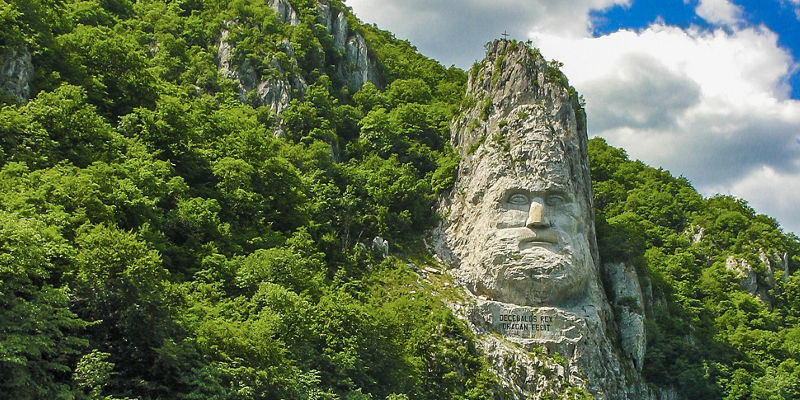
Near the town of Orsova, Romania, as the Danube winds blow between high walls of stone, a towering rock sculpture pays tribute to Decebalus, the last king of Dacia.
“Worthy antagonist of the Romans”
In the first century AD, few countries had the resolve or resources to resist the mighty Roman Empire. But led by its courageous emperor Diurpaneus, Dacia (modern-day Romania) did just that. When Emperor Domitian attempted to conquer Dacia in 87 AD, Diurpaneus and the Dacian army ambushed the Roman legions and secured a major victory. A year later, the Dacian emperor repulsed another wave of Roman troops, and required the Romans to pay Dacia large annual tributes to maintain the peace. After his victories over Domitian, Diurpaneus took the name Decebalus, which means “with the strength of 10 men.”
Emperor Trajan
In 98 AD Trajan became the Roman emperor. Determined to end a humiliating peace treaty and finish what Domitian started, Trajan sent Roman forces that invaded Dacia and placed Decebalus on the throne as a “client king”—beholden to the Roman Empire. A Roman garrison was stationed there to ensure order, but three years later, Decebalus routed the garrison.
Furious, Trajan built a bridge over the Danube in 105 AD and sent wave after wave of reinforcements. This time, the Romans conquered Dacia, establishing permanent control in 106 AD. Decebalus escaped with his family, but the Romans hunted him down, intent on capturing him and parading their vanquished opponent through the streets of Rome. Decebalus wouldn’t give them the satisfaction: he slashed his throat before he could be captured.
Tributes for Decebalus
The Romans took the head and right hand of Decebalus as trophies, but their admiration for the Dacian king was so great they recorded his bravery on Trajan’s Column, built in 113 AD to commemorate the battles. That column is still viewable in Rome today. Roman historian Dio Cassius wrote that Decebalus “judged well when to attack and chose the right moment to retreat,” and described Decebalus as “a worthy antagonist of the Romans for a long time.”
-
Discover the city that spans the Danube—and millennia
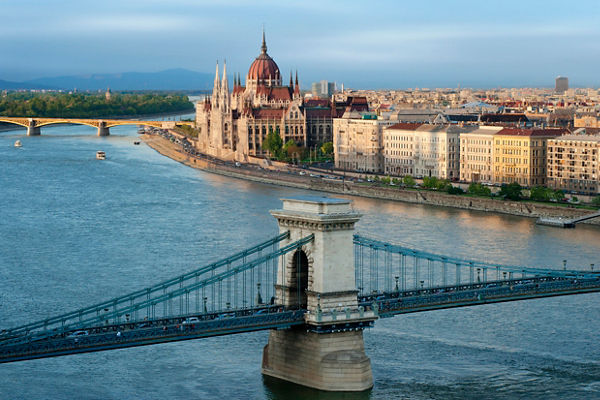
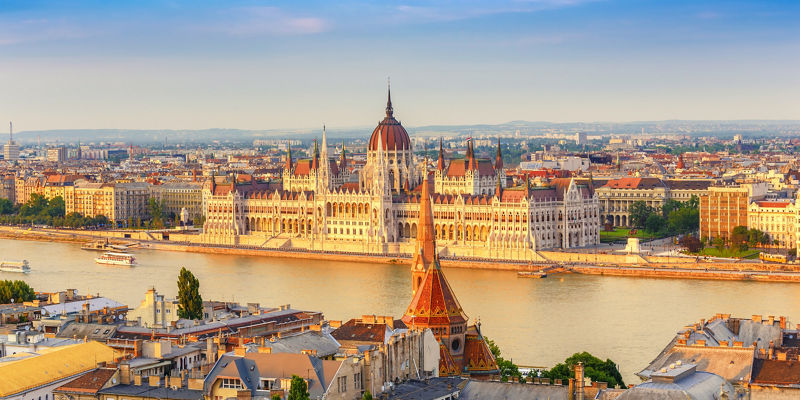
Budapest was once two cities. The hilly, traditional Buda side is on the Danube’s western bank, while the flatter, more modern Pest is on the east. The two cities were joined in 1849 with the completion of the Chain Bridge. In 1873, Budapest became the capital of Hungary, making it one of Europe’s youngest capitals. But the city’s ancient roots date back to the Romans.
Budapest is a city of modernity and antiquity, a city of restorative thermal baths and remarkable architecture and a city of breathtaking vistas. It is also a city that reverberates with music, from Bartók and klezmer to jazz and local Roma.
The city of Aquincum
Centuries before Buda and Pest merged, the Romans built the city of Aquincum as a military base. In the 1st century AD, some 6,000 Roman soldiers were stationed in Óbuda, or “old Buda.” The settlement offered the latest Roman conveniences, including central heating, public baths and an amphitheater. Located within the city limits of Budapest, the ruins of Aquincum and the artifacts in the Aquincum museum give you a glimpse of Budapest’s ancient past.
Bridging Budapest
Today, seven main bridges span the Danube in Budapest, including Elizabeth Bridge, Liberty Bridge and Margaret Bridge. These bridges unite the city’s distinctly unique sections. Buda is home to the older structures of the Castle District, Matthias Hill, Fishermen's Bastion and Gellért Hill—all of which offer stunning views of contemporary, bustling Pest across the river.
-
Folk art delicately wrought
Hungary enjoys a rich folk heritage in its music, cuisine and art. Few of the nation’s artists have received the recognition of ceramicist Margit Kovács. Perusing her collected works in Szentendre’s Margit Kovács Museum provides a glimpse of past rural life in the Hungarian countryside.
An inspiring setting
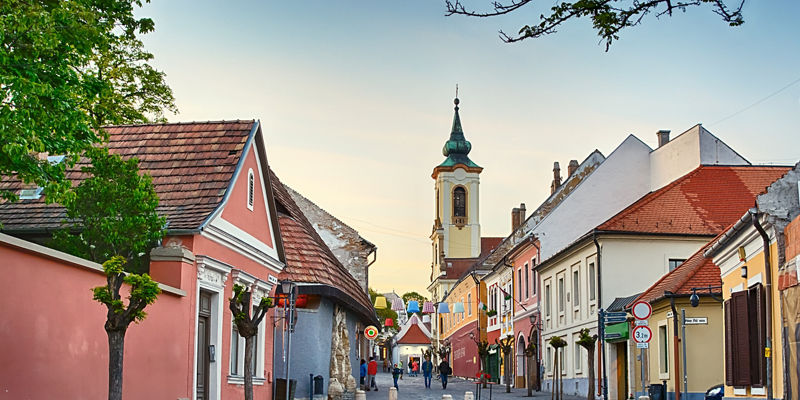
Exploring Szentendre, it’s easy to imagine that the charming village served as a muse for Ms. Kovács. Houses boast richly hued facades and narrow, picturesque streets transport visitors to a simpler time reminiscent of fairy tales. Today, this inviting town is home to a thriving artists’ community; it is pure pleasure to browse its galleries, rich with paintings, sculptures and more that have been heavily influenced by the work of Kovács.
Browse the Kovács collection
Margit Kovács' fascinating ceramic creations portray many aspects of Hungarian rural life. She often sculpted religious imagery and was known for her depictions of locals living off the land. The simplicity and innocence of her sculptures and murals gained her international recognition. Yet her work also celebrated a communist ideal, making her one of the few artists of her era to thrive in post-war Hungary, and providing insight into the nation’s past.
-
Simple and secluded farm living in Bulgaria
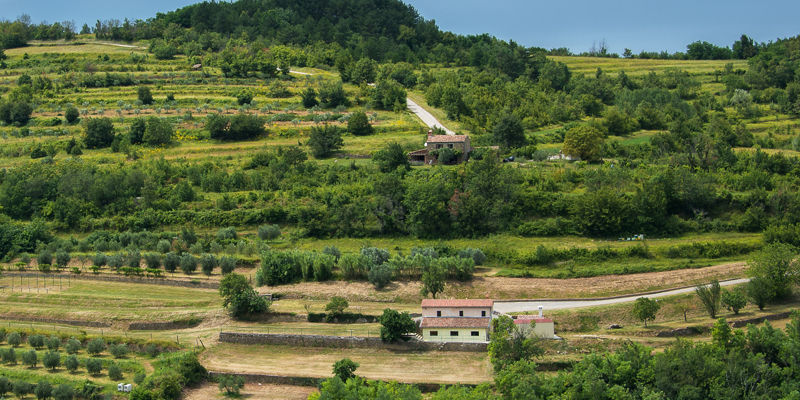
In the hinterlands outside Vidin, life is simple and stress-free. The air is clean and rich with oxygen. The food is fresh off the farm. And the vistas are pastoral and breathtaking, enough to make anyone want to spend countless years here. And many Bulgarians come close to doing just that.
The evidence for yogurt
In the early 1900s, a Russian Nobel prize-winning scientist linked locally made yogurt (specifically, its Lactobacillus bulgaricus bacteria) to Bulgaria’s long lives. Centenarians were nothing new to the region, not even back then. And they knew that yogurt had been around since Roman times. It was the Thracian warriors who carried sheep’s milk in lambskin bags, where it fermented under their body heat. Still today, the full-fat, homemade yogurt made on local farms is believed to ward off toxins, infections and even cancer.
Other secrets to a long life
Though science may point to locally fermented yogurt as the secret to longevity, more anecdotal evidence suggests that the dairy product is only a small piece in a more complex puzzle. The close-knit family life of rural Bulgarian culture may foster a life-affirming positive outlook. Stable marriages and outdoor farm labor may also help to prolong lives. Then again, part of the answer may simply lie in the genes, as many Bulgarian ancestors have also lived more than a century.
-
The rich history and culture of Serbian opera
Soon after the Serbian National Theater's founding, the pivotal 1888 Constitution was adopted in its hallowed halls. Charity balls and concerts were also held here, ensuring its importance to the city’s social life. But it was the luxurious interiors and grand performances that put the theater on the European cultural map.
One of Europe’s most prolific stages
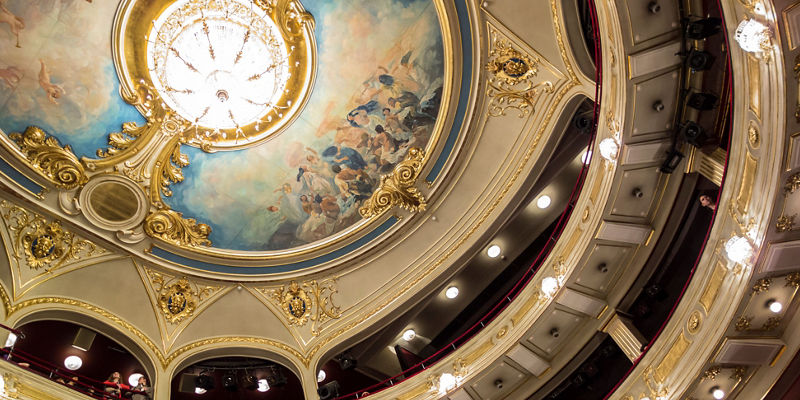
More than 600 performances are held each year at the Serbian National Theater. Three artistic ensembles create mesmerizing opera, ballet and drama under this regaled roof. Madama Butterfly, Swan Lake and the plays of Ibsen and Shakespeare have all been performed under the soaring gilded ceiling of the Grand Hall, contributing to the theater's status as a Serbian Monument of Culture of Great Importance.
The show must go on
The singers, actors and dancers who perform under this roof are among the most dedicated artists in the world. Not even national conflict could keep them off the stage. Legend has it that as bombs fell on Belgrade in 1999, the show went on with dignity and pride, proving that art endures even in the most trying circumstances—a sentiment embraced by the patrons who braved the streets to attend the daily performances.
-
The tranquil side of Balkan life
Rich Slavic traditions endure throughout Croatia, particularly in its rural reaches. Stone villages are tucked into valleys encircled by hills. Medieval castles bear testament to a fascinating past. And today’s Croats work and cultivate the land much as their ancestors have for centuries.
Explore a riverside village with a rich past
Tiny Ilok, perched on a hill overlooking the Danube, is Croatia’s easternmost town. Life moves slowly in this frontier village, overlooked by its namesake fortified edifice and bell tower. Today, the castle’s vast chambers house a remarkable collection of historical and ethnographic artifacts and artwork that chronicle Ilok’s turbulent history as a border town and its evolution into a major agricultural center.
An oenophile’s delight
Croatia’s viticulture is often overlooked, despite that its climate and terrain closely resemble those of Tuscany, right across the Adriatic Sea. Around Ilok, the gently sloping hills of Fruška Gora are cloaked in lush vineyards that produce fine wines—bottles of the area’s Traminac are even shipped to English royalty. There is no better place to taste the town's delicious vintages than in the wine cellars of its castle, among the most renowned in Croatia.
Danube Highlights
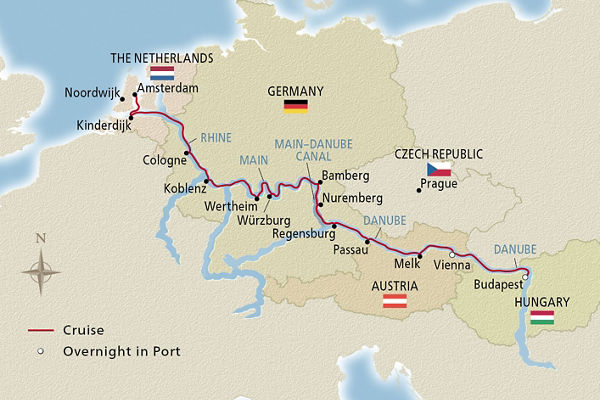
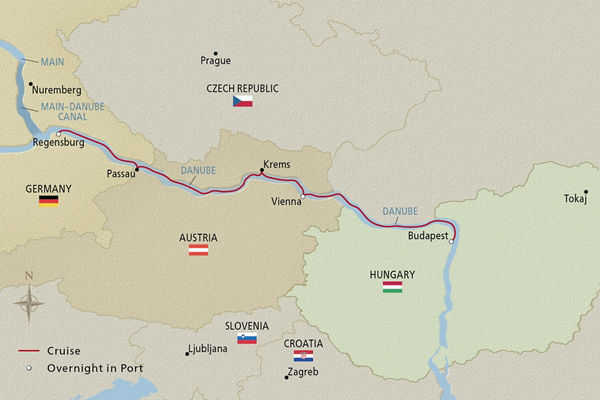
A Danube River cruise unveils Europe’s rich and dramatic history. Glittering cultural capitals, lush vineyards, magnificent monasteries and endless scenic splendor line the river’s banks. Here are some sample highlights you will see along the Danube River:
- Enchanting Passau, situated at the convergence of three rivers
- The baroque splendor of Melk Abbey
- Vienna’s elegant architecture
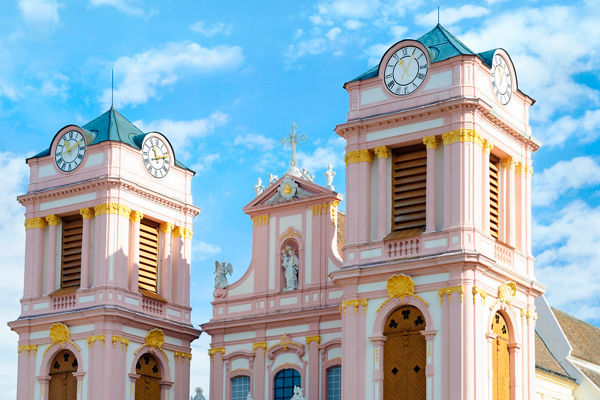
- The splendid Benedictine Abbey of Göttweig
- Scenic beauty of the picturesque Danube Bend
- Vidin’s medieval Baba Vida Fortress
- Budapest’s stunning Chain Bridge & Parliament Building
- Soaring cliffs of the scenic Iron Gate
- Romania’s rural culture & rich folklore
- Belgrade’s impressive Kalemegdan Fortress
Destination Insight Videos

Austria’s Göttweig Abbey (8:21)
Journey to a working baroque abbey where Benedictine monks have worked and worshipped for more than 900 years on a hilltop overlooking the Wachau Valley, following The Rule of St. Benedict.

At home in Salzburg with Viking guides Peter Staudinger and Julia Hattinger (20:10)
Discover one of Austria’s most picturesque cities, Salzburg, the birthplace and childhood home of Mozart and setting of the beloved film The Sound of Music. During an informative tour led by Viking guides Peter Staudinger and Julia Hattinger, follow along as they show us some of their favorite places and delve into the history of this elegant Alpine destination. Should your curiosity be piqued, you will be delighted to know that you, too, could stroll the old-world streets of Salzburg when you join us there as part of an optional excursion on our Grand European Tour or European Sojourn river voyages.


Danube Travel FAQ
Enriching Itineraries—Danube
Choose one of our immersive voyages and discover the many benefits of exploring in Viking comfort.