
-
My name is Alistair Miller, and for the past 10 years, I've been exploring the world with Viking, photographing some of the special places that Viking ships visit.
-
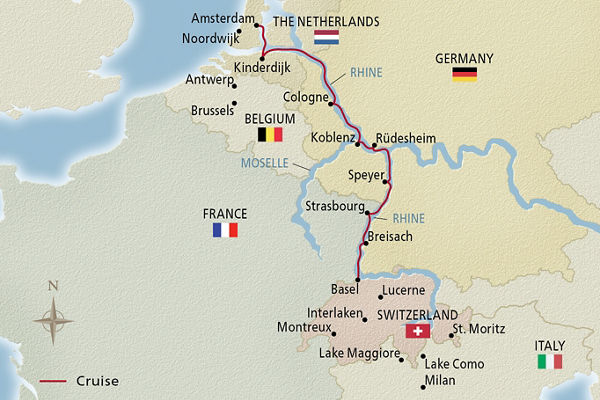
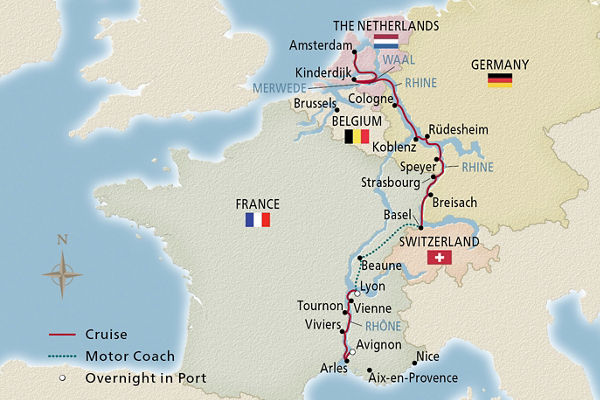
Now, normally I'm always behind the camera, but recently I was asked to be in front of it and share some of my experiences as I sailed down the beautiful river Rhine, starting my journey in Amsterdam, in the Netherlands, through Germany, France, and finishing my journey in Lucerne in Switzerland.
-
The Rhine Getaway is one of Viking's most popular river itineraries.
-
And I'd like you to sail along with me, filmed on iPhone thirteens.
-
Some of my experiences I did independently.
-
Others are part of Vikings included tours.
-
I do hope you enjoy this five part series, and maybe one day consider taking the same journey yourself.
-
In this episode, I go inside a houseboat, then challenge myself cycling in the city of bikes, and I visit one of my favorite shops.
-
And at our first stop on the journey up the brine at the beautiful UNESCO site of Kinder D**e, I find out what it's like to live in a windmill from a 13th century fishing village on the river Amstel to its 17th century golden age, as an economic superpower to what is today one of Europe's most picturesque and wealthy cities.
-
This is Amsterdam.
-
You know, one of the things I sing about when I think about Amsterdam, and that's houseboats, and I've always wondered what's it like to live on one.
-
So I thought I'd come to the houseboat museum and find out Hi.
-
Hi there, Vincent.
-
Yes.
-
Nice to meet you Alistair.
-
Welcome.
-
Vincent.
-
This is your houseboat museum?
-
Yes.
-
And you are the owner, The founder.
-
Yeah.
-
But you don't live on it, is that right?
-
No, that's true.
-
I, I start living on another boat opposite here.
-
And, uh, when I start living in boat, I found out that a lot of people wanted to look inside my houseboats because they were anxious to know everything about house boating.
-
So that's why I bought another boat, an original one, and opened it for public.
-
You know, uh, when one thinks of Amsterdam, houseboats are one of the first things that you think of.
-
Mm-hmm.
-
And, uh, I've always wondered, well, I've always wanted to look inside one.
-
Mm-hmm.
-
And now we're going to, um, but I've always wondered or had some questions about, for example, if I came to Amsterdam today and I wanted to, I said, Alistair, you're gonna live on a houseboat.
-
How possible is that?
-
And what, and what, what would it cost me?
-
Yeah.
-
For example, it's not allowed to bring in new boats.
-
The number of licenses are given out.
-
So there's also not a waiting list for people who want to bring in your boat.
-
The only thing you can do is buy a boat, which is already on the spot.
-
And because the number of boats is limited in the city center, there are about 750 boats total of Amsterdam, two and a half thousand.
-
So not a lot of boats are coming up for sale.
-
And when, uh, there are less boats and a lot of people want to buy a boats, then you know what price, the price is sky high.
-
Yeah.
-
So now it's a bit of, a bit of a luxury to live on a house.
-
Right.
-
It's really a bit of a luxury while it started as a kind of poor thing, because a lot of musicians and, and, and people who didn't have a lot of money start living on boats because, uh, they couldn't afford a house.
-
Well, 'cause I'm old enough to remember in the seventies when it was a cool thing, a very cool thing to do, to go to live on a, and, and you had, you had John and, uh, Yoko, It was happy time.
-
So It was Yeah.
-
Down the road.
-
I mean, it was, yeah.
-
So it was all going on.
-
Yes.
-
I guess that's, so what, okay, here's the question.
-
What kind of people live on houseboats now?
-
So it's changed from, I always say from hippies into yuppies because you need quite a lot of money.
-
And, and to, to finance boat is difficult because banks, they like to have, uh, fixed housing as a, how do you say it?
-
It's a backup for their money.
-
I'm guessing you are all plugged in for electricity and sewage and your garbage gets eed and It's all Yeah.
-
So for that, we have all the same things as, as, uh, for a house, uh, only we have flexible things, of course.
-
And our wastes pipeline and water pipeline is surrounded by, uh, thermo, uh, wire so that it cannot freeze in winter.
-
Ah, yes.
-
So it's, it's heating up, uh, when it comes below four degrees Celsius.
-
What's, what's it like when the canals freeze?
-
It Must be, yeah.
-
It's especially the sounds of the, the cracking, uh, ice.
-
Yeah.
-
Yeah.
-
And a lot of people think it's dangerous for the ship, but the ice is only this thick here, so Yeah.
-
It's not the, it's not The Antarctic.
-
No.
-
Well, why don't we, um, now that we're in your houseboat, um, maybe you could give us a little tour.
-
Yeah, of course.
-
Show me the, um, sleeping quarters.
-
Yeah.
-
And The sleeping quarters are quite, quite small.
-
Oh my god.
-
Uh, Here it was for two children.
-
Yeah.
-
And when mom and dad would still be there, they could close the door.
-
So, uh, they had some privacy.
-
The other side, this one is bigger or less small, uh, because it's under the stairs also.
-
This one was for two adults, and they, uh, it's about one meter 70.
-
And, uh, of course the Dutch are taller now, but by then they were little more, uh, less tall.
-
And they didn't slip completely flat, but a a bit at the end up, Because people at that time thought they might die in, in their sleep if they slip horizontally.
-
Yeah.
-
Okay.
-
Now I was gonna say, Dutch people are tall.
-
They don't look Yeah.
-
We, we drink too much milk.
-
Yeah, yeah.
-
I've heard that.
-
I've heard that it's, yeah.
-
But it's kind of cozy though, isn't it?
-
Yeah.
-
Yeah, yeah.
-
Well, I, I won't sleep here also, I wouldn't mind being a child in the Oh, yeah, Yeah.
-
You can sleep here.
-
It's no problem.
-
Yeah, yeah, yeah.
-
So this was the former cargo health in former times.
-
Right.
-
These could be opened and, and, uh, the coal or potatoes or whatever they want to transport GoodCo in Uhhuh.
-
And, uh, these ships did, they became too small to carry these goods, and so the transport was taken off by trucks.
-
And that's why these ships were sold for the, for the scrap price.
-
And that's why in the, in the sixties, it was booming to have a houseboat because they were very cheap to buy very cheap.
-
And there were no rules.
-
You could park them anywhere.
-
So, wow.
-
Now it's overregulated.
-
We have the satellite pictures, of course, now exactly where the ships are.
-
And you're not allowed to move to, to go one meter like the air.
-
Oh, really?
-
So the romantic size about that is a bit, uh, is a bit gone.
-
It's, it's strictly regulated.
-
Okay.
-
Oh, look at this.
-
Yeah.
-
This is the, the oldest Part of the interior of the ship.
-
Right.
-
Tell me about this.
-
Yeah.
-
In four times they cooked here and they had special pots, which were very, uh, smart.
-
They had, uh, not a flat bottom, but uh, it could be exactly fit in that part, so it couldn't fell down when, uh, the ship would be, uh, ships Movement.
-
Yeah.
-
Yeah.
-
So it maybe good for on the Viking ships also.
-
Yeah.
-
Well, I'll pass that information on.
-
And this is a wonderful, uh, wonderful stone And, uh, ironer also.
-
Yeah.
-
Oh, yes.
-
Yeah, yeah, yeah, yeah.
-
It was used, uh, with coal.
-
So it would've been nice and cozy in here, wouldn't It?
-
I think so, but I don't know if people, uh, found it cozy and nice because we have the choice to be in here.
-
Yeah.
-
But they didn't have a choice.
-
They only should be in here.
-
And maybe it was damp and with clothing.
-
Okay.
-
I'm just romanticizing the past, I Think a bit.
-
But, um, and also, you know, as a living space, it's pretty tiny.
-
It's very tiny.
-
It's very tiny.
-
If, if people come here, two adults and two children, I said, uh, do you have an own room yet?
-
And then I said, can you imagine living here altogether?
-
No, no private room.
-
Then of course, we're a bit spoiled now, but the other side was, this was a bit too small.
-
That's why children in many times went to a boarding school.
-
Okay.
-
Yeah.
-
During the, Oh, just we didn't establish when, when was this bill?
-
What, what period are we talking about? 19, 14.
-
Wow.
-
Okay.
-
Okay.
-
So You can, we're full of, full of these buds, right?
-
Yeah.
-
Right.
-
Wonderful.
-
Should we go and have a look forward?
-
Yeah.
-
Yeah.
-
Great.
-
Um, this is a place in front of the ship.
-
Yeah.
-
Um, so there you see the bow and, okay.
-
Uh, there was sometimes an assistant, I don't know how if you say that, uh, like a person or, yeah, yeah, yeah.
-
So he slept there.
-
And also they, they could only go from the outside via the stairs there, because this was closed.
-
We put now a Right, yeah.
-
A window in it for showing, because this was a watertight wall.
-
Right.
-
If there would be any leak there, it wouldn't enter the ship.
-
It wouldn't come into the It would only enter.
-
Yeah.
-
If you hit something, it would be, yeah.
-
Yeah.
-
I hope the finger ships also have that.
-
But they did the viking ships.
-
Oh Yeah.
-
I'm sure they, yeah, they do.
-
Trust me.
-
They do.
-
Yeah.
-
Okay.
-
So that Looks quite nice little.
-
Yeah, yeah, yeah.
-
Oh, but it was quite cold there, eh?
-
Oh, yeah. 'cause hardly any insulation, no ins, installations.
-
And here you can see very good.
-
How the boat was riveted in four times in 1914, welding process was not invented.
-
So they had two plates put a, a hole in it and a hot rivet.
-
Right.
-
And then at one place, they would, uh, hit the rivet hammer and it could be fixed like they did with the Eiffel Tower.
-
So there are 10 thousands of these rivets in, in here.
-
Yep.
-
That's people who did that job were all deaf. 'cause they didn't use good protection use.
-
Right.
-
Yeah.
-
Yeah.
-
Wow.
-
You know, one thing you could do in Amsterdam is hire a bike for the day, but it's not for the faint hearted.
-
There are more bikes in this city than people, and there's a lot of people.
-
And every year, 15,000 of those bikes end up in the canal.
-
In spite of that, I've decided to go and hire one for the day.
-
But if I bring it here, how am I ever gonna find it again?
-
So I'm renting a bike from you.
-
Yes.
-
Uh, but this is, uh, a typical Dutch bike.
-
This is, yeah.
-
Typical Dutch bike.
-
Yeah.
-
And It's called a grandmother's bike.
-
This is, It's called, uh, the real name is Oma Bike.
-
Oma Bike Omo, Fitz.
-
Okay.
-
But you can say grandmom bikes.
-
Yeah.
-
Typical bike.
-
There's no hand brakes, no gear.
-
Okay.
-
Mm-hmm.
-
This only pedal, brakes, brake in the, So the brake works from the pedal.
-
Yes.
-
M enough people call this And you sit up very straight 90 degrees and, uh, like a slow, slow relax cycling.
-
That's why they call this no gears grandma, no gear.
-
Simple bikes.
-
There's a lot of of bikes in Amsterdam.
-
A lot more than the people.
-
More than the people.
-
More than the people there.
-
And they go fast, don't they?
-
Yeah.
-
They go fast.
-
They go fast.
-
Yeah.
-
And the city is very good for the biking when the people start to cycling.
-
Mm-hmm.
-
They never give up because it's easy.
-
There is no hills straight.
-
Yeah.
-
The city is great for cycling.
-
That's why so many bikes.
-
And that's why the people choose basic bikes without gear because, and mostly they don't need it.
-
Good job.
-
Great Job.
-
Yeah.
-
That's The tires.
-
Okay.
-
The tires are good.
-
Yeah.
-
Okay.
-
Right.
-
Thank you so much.
-
You're welcome.
-
I'll see you later.
-
Okay, here it goes.
-
Whoa.
-
You know, it's a really bike friendly city.
-
This look, they even think of putting rails on the staircase.
-
How about that?
-
And we're down.
-
Brenda, you sure?
-
It's okay?
-
I have these in my state room on The show.
-
It's no problem at all.
-
Do just tell them you get a face.
-
They last a week.
-
They accept the entire time of the cruise, and nothing better than having fresh flowers.
-
Uh, so these Will last me until base.
-
They should.
-
In the Netherlands, there's normally a one week guarantee on flowers you buy.
-
If they are not lasting one week, you get free for, you get new ones for free.
-
But when you're in Basel, it's very hard to come back here to claim that, but okay.
-
Yeah.
-
There is a one week guarantee, a warranty.
-
Always.
-
This place is the mecca of everything to do with writing letters, envelopes, paper with stamps and seals.
-
Have a look.
-
Wow.
-
Look at this.
-
It's beautiful.
-
Peter.
-
Good morning.
-
Good morning, ALIST.
-
Hi.
-
Good morning.
-
Hi.
-
Nice.
-
How are you?
-
Nice to meet you.
-
Thank you for letting me come and visit you.
-
Sure, of course.
-
Um, Peter, I read that, uh, this soap has been here since 1865. 65.
-
Oh.
-
The company exists from 1865.
-
And the store, how you see it right now?
-
It's from 1902.
-
Okay.
-
Before it was more in the center on of Amsterdam.
-
Right.
-
And just tell us, I mean, I can see that you sell pretty much everything to do with the art, and I'm gonna call it an art of letter writing.
-
Okay.
-
Yeah.
-
We, we call it more a stamp store.
-
A stamp store, and not stamps, which you put on a envelope, but rubber stamps.
-
Right.
-
That's how we started it.
-
Okay.
-
But besides rubber stamp, we also have the wax stamps, embossing stamps, burning stamps, cookie stamps, a lot of stamps.
-
We have, oh, Could we take a little look around?
-
Oh, Sure.
-
Where you wanna start?
-
I'll Follow you.
-
Yeah.
-
Okay.
-
We go to the, this is our famous wall of wax, as we Call it, of wax.
-
I love that.
-
The wall of wax.
-
Okay.
-
It's a wax stamp, which, which they use already in the, in the, how you call it, the, uh, hs ago.
-
Yeah.
-
And you see it's, they put it on the ladder from one king to another king.
-
Right.
-
And it's a seal.
-
And we have all kinds of symbols.
-
We have initials when it's becomes very personal.
-
And besides that, we can make every kind of stamp.
-
We have the wax in lots of colors.
-
It's not just red, but lots of colors.
-
We have the flexible one.
-
And what you see down there, that's the original wax.
-
These ones, this Is really the original wax.
-
Okay.
-
From Hs ago.
-
Right.
-
And it's still the same.
-
Fantastic.
-
Yeah.
-
The wax spoons like those to, to melt it.
-
Of course.
-
Right.
-
Yeah.
-
And these are the modern kind of wax.
-
I mean, before I came here, I was thinking, who writes letters?
-
You know, who writes letters these days?
-
Well, the only thing I get in my mailbox are bills and parking fights.
-
And I haven't had a letter.
-
True, true.
-
I didn't get a letter for since maybe 10, 12 years.
-
So, yeah.
-
Okay.
-
Who's writing letters these Days?
-
Uh, there's still a bunch of people who still writing letters, and that's the, the who thing about covid.
-
People start writing again.
-
Oh, That's interesting.
-
And of course, there's a very small part of people who wants to use it with a wax seal.
-
But even the children who see the Harry Potter movies or in Games of Drones, the other big movie, uh, series, they use it.
-
So, and people, they wanna do it theirselves because there's something, and it looks much better when you send a letter with a seal on the backside of the envelope.
-
I was gonna say, there's something very special about getting, It's very special.
-
It makes it, and even birth announcements.
-
Wedding invitations, what we do also, they wanna have this with their initials when they gonna marry.
-
Right.
-
Okay.
-
So, okay.
-
I have a, I have a family ring, which has an, it's Not a ring, it's a stamp.
-
It's A stamp, yes.
-
Yeah, it's a stamp I Could use, I could, yes.
-
Put into the, into the wax.
-
Take it off and you put it in the hot wax.
-
I Think I'm gonna try that.
-
You have to do it.
-
Yeah.
-
I better Remember to take it off first.
-
Yeah, yeah, please show me, show me some ball.
-
Upstairs we have the typical Dutch cards, which has the corn edge, if I may show you.
-
Yes.
-
So it's not a straight card, but it's it's a rough card.
-
It's a sort of serrated, isn't it?
-
It's a little, Yeah.
-
I, Oh no, I see.
-
Yeah, that's, it has a little texture.
-
Yeah, Yeah.
-
It has a little texture.
-
Looks very nice with the Dutch ribbon.
-
Of course.
-
Yeah.
-
We have all kinds of sizes with or without envelopes.
-
Right.
-
Um, on the table, we have the very pretty Italian paper or cards, just writing a letter or just a thank you note.
-
Oh, that's beautiful, Peter.
-
Yes.
-
What are we doing here?
-
Um, I'm, um, going to make a seal out of this wax stamp, which we have made recently.
-
Right.
-
So this is a professional item.
-
Normally you use it, uh, with a spoon above the flame of the candle.
-
You're gonna melt it, you pour it your stamp.
-
But this goes of course quick as we have to do a lot.
-
So, okay.
-
That's why we use this.
-
This is the, the original red wax.
-
Mm-hmm.
-
And you just, yeah.
-
Oh, wow.
-
Look At this.
-
It goes very quickly, you know, right now.
-
So you just make a few drops of it, about the size of the stamp, in this case, two and a half centimeter uhhuh.
-
And when this is done, oh my God, you take the stamp.
-
I have to look how the position is.
-
And it looks, has to be like this right way out.
-
You always have to put your breath on the stamp before you put it in hot wax.
-
So like, now I put it in, I lift it for a few seconds.
-
You don't have to press hard, just leave it.
-
The wax B becomes hard again.
-
Already you take it off.
-
Oh, Wow.
-
Look at That.
-
That's the result.
-
Beautiful.
-
Why do you do the, uh, why do you do the breath?
-
The, the hot wax, um, shrinks a little because of the cold stamp.
-
So it's, you know, uhhuh and because you have moisturized it, you take it out a little bit easier.
-
Okay.
-
It doesn't, normally it's brass.
-
Every time we make is out of made of brass.
-
Right.
-
It doesn't stick to this.
-
But you make it a little bit easier to take it out.
-
It's just the small details.
-
And if I didn't have your warming machine there.
-
Yeah.
-
Can, can you do this?
-
Could you do it with a lighter or No?
-
Of course you can do it with a lighter, but when you put this on the lighter, it'll burn.
-
So always use a spoon, then the flame comes against the spoon.
-
Uhhuh, it doesn't, in, um, the wax doesn't become black.
-
Okay.
-
Which is very important.
-
Yeah.
-
And it doesn't smell that bad.
-
So for anybody watching this, uh, you are in right in the middle of Amsterdam?
-
Yes, central.
-
We're in the middle of the Amsterdam.
-
Easy to find.
-
Really?
-
In the city center of Amsterdam.
-
Yeah.
-
Near the Amsterdam Museum.
-
Right, okay.
-
Which is a very, uh, famous museum of Amsterdam.
-
And For somebody who can't come to Amsterdam Yes.
-
That is interested in what you've Produced.
-
Of course.
-
Nowadays we have you online.
-
We have a web store.
-
It's you Still online?
-
You Have a, it's post Winkle, and they can buy almost everything's what you see right now in the store.
-
Fantastic.
-
Yeah.
-
I'd spent a great couple of days exploring Amsterdam before the ship sailed.
-
It's a charming, friendly place, and I'm always happy to return there.
-
And on my last evening, I strolled the city at night, I met up for a drink and a chat with my friend and local resident, Sasha.
-
Good morning, Alistair.
-
Come on in.
-
How are you?
-
Good.
-
How are you?
-
Good.
-
Happy to be here.
-
Thank you. 16 of the 19 win, no zero are, uh, inevitable by people.
-
People still live there. 16 of 19.
-
Yeah.
-
Yeah.
-
And but the, the people who live there, they also got another job beside the windmill.
-
Running the windmill.
-
Running is only for hobby and because they like it.
-
They live there, but it's not necessary.
-
So from Monday till Friday, they are at work.
-
Right.
-
Most of the time.
-
And the windmills who are running, those people are home.
-
And when there is wind, they turn the windmill on volunteers base because they like it.
-
And, and, and I mean, do you turn the, the, I guess you need to, 'cause it keeps the machinery Exactly.
-
Where you put a car still work still for 10 years.
-
It doesn't work anymore.
-
Exactly.
-
Exactly.
-
And the same, the same thing.
-
You must keep running it because then it's, you keep it in good shape.
-
And then the maintenance work is still less.
-
And, and here's the question.
-
Is it sometimes too windy?
-
Of course there's too much wind.
-
Yeah.
-
Too much wind.
-
What would the, it would be, it would damage the Yeah.
-
Then you can't control it anymore.
-
Then the braking system won't work and the whole thing collapse.
-
You could just take off.
-
Exactly.
-
It works.
-
Only it just like a helicopter.
-
Yeah.
-
Flying windmills that Yeah.
-
Yeah.
-
That's great.
-
That's great.
-
And when the, when the sails, when the, the blades are turning, can you, can you hear it inside?
-
Of course.
-
Does it the whole building?
-
Yeah.
-
Everything is, is a little bit shaking and you hear the ranking of the wheels and everything.
-
Right.
-
That's a great moment.
-
Wow.
-
Amazing.
-
Can we just have a little look?
-
This is sleeping room and left bottom in one.
-
That's fantastic.
-
That's a big piece of oak.
-
Yes. 14 meters.
-
And still from the build, still the same.
-
So this runs through the Yeah, the whole, yeah.
-
It's starting upstairs and the top of the window, it goes totally down to the pump outside the windmill.
-
So the, I mean this, the, the blades are attached to this.
-
Yeah.
-
Yeah.
-
That's why it's here.
-
Is that's what the actual, the actual of the, where the blades are connected on, on the outside is coming into the head of the windmill.
-
Yeah.
-
And around the, around the actual, there we have a big wooden wheel.
-
Right.
-
And, um, also on this, um, there we go.
-
So there's a little bit of wind.
-
Yeah.
-
And on the, and on the chef upstairs and downstairs, you have little wheels who grabs into the big wheels.
-
Yeah.
-
And that's the whole purpose of running the wind, like, like they engage.
-
Exactly.
-
Yeah.
-
Okay.
-
Okay.
-
I just think that's certain.
-
I mean, how come it just started turning?
-
Well, it's, it's, uh, uh, 'cause there's a little Yeah.
-
But the wind is not so strong today.
-
I hope there is coming some more wind, so then it's really going.
-
But now the wind is not so much.
-
Sometimes he runs slowly and then he stops again.
-
That should be wonderful.
-
I'm just imagining lying in bed, listening to it.
-
Well, normal wise, when you're laying in bed in, in the evening or the night, you don't run the windmill because you always must keep an eye on it.
-
Just because everything can happen.
-
When you run the windmill, the wind can change.
-
The wind can picking up, you can have thunderstorm.
-
So you must always, when you're running it, stay with it and keep an eye on it.
-
This might be a stupid question, but can, can you change the direction?
-
Yeah.
-
Depending on where the winds, you can, the whole top of the wind is laying on a roller system.
-
So you can turn the top included to blade 360 degrees around.
-
So you can use every wind direction, wherever the wind's coming from.
-
Yeah, exactly.
-
I think that's fantastic.
-
If there's one thing the Dutch know a lot about its water and how to manage it.
-
In this country, thousands of people live on land that was once under the sea.
-
And today the 19 windmills of kinder are no longer required to pump water and drain the land.
-
Now a computer operated system does the job for them.
-
And here in the old pumping station, Jack took the time to explain to me how it all used to work.
Long-time Viking family member and renowned British photographer Alastair Miller begins his journey in Amsterdam, where he reveals the cultural treasures of the Netherlands’s historic capital. Join Alastair as he peruses unique shops (Posthumuswinkel) and a colorful flower market, pedals through the city and visits the owner of a houseboat museum. After stepping on board Viking Kara, one of our award-winning Viking Longships, he sails to Kinderdijk to meet with locals who care for the iconic windmills.